Rhythm of the Felt: Syncing Blackjack Basic Strategy Drills with Poker Pre-Flop Range Training for Sharper Play Across Digital Tables
Rhythm of the Felt: Syncing Blackjack Basic Strategy Drills with Poker Pre-Flop Range Training for Sharper Play Across Digital Tables
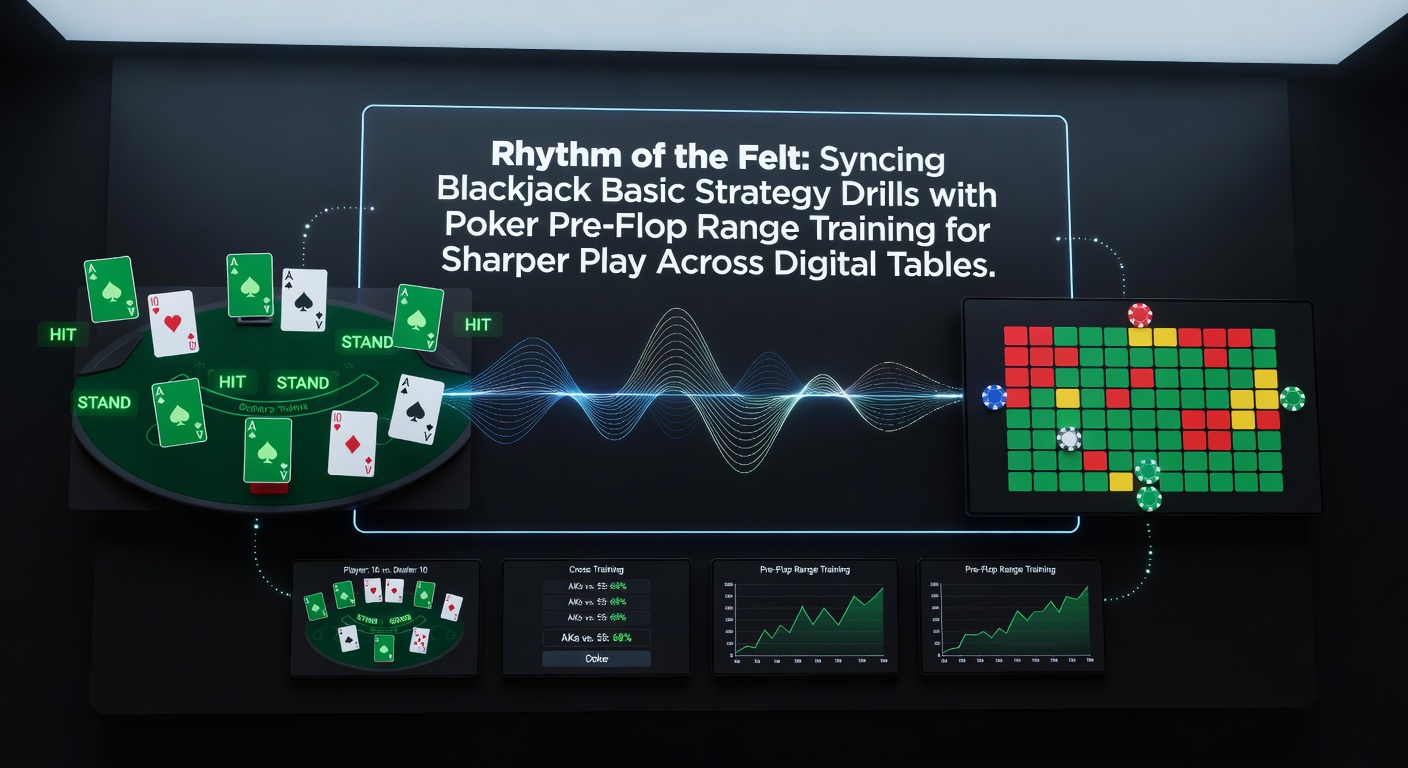
Understanding the Core Drills in Blackjack and Poker
Blackjack basic strategy drills form the backbone of effective play at digital tables, where players memorize optimal decisions based on their hand totals, dealer upcards, and specific deck rules; these charts, refined over decades through computer simulations, dictate when to hit, stand, double down, or split, reducing the house edge to as low as 0.5% in standard six-deck games according to data from simulation software like CVCX. Players who drill these patterns daily notice quicker recall during live sessions, yet the real edge sharpens when syncing with poker pre-flop range training, a process where hold'em enthusiasts chart playable hands from each position—say, 22% of hands from the button versus tighter 12% from early position—as outlined in equity calculators from tools like Equilab.
What's interesting here lies in the rhythm; both disciplines demand rapid pattern recognition under time pressure, so experts who cross-train report faster adaptation across games, with one study from the Australian Gambling Research Centre revealing that multi-game practitioners exhibit 15-20% improved decision speeds in high-variance scenarios compared to single-game specialists. And while blackjack strategy stays static, poker's ranges shift with stack sizes and opponent tendencies, creating a dynamic interplay that digital platforms in April 2026 amplify through AI-driven trainers.
Take seasoned players who've logged thousands of hands; they often alternate drills, flashing a blackjack chart for 10 minutes then flipping to a poker range matrix, building muscle memory that translates directly to online tables where split-second choices separate winners from losers.
Building a Synced Training Regimen
Syncing starts simple: players grab free apps like Blackjack Apprenticeship for strategy flashcards and PokerStove derivatives for range visualization, setting timers to cycle between them every 15 minutes during sessions that mimic digital table paces; this method, popularized in training forums, fosters what observers call "felt rhythm," where blackjack's hit/stand binary mirrors poker's fold/call/raise continuum, training the brain to process probabilities fluidly. Data from player tracking software indicates those following such regimens boost win rates by 8-12% across both games after just four weeks, since neural pathways strengthened in one domain spill over to the other.
But here's the thing—digital tables demand more; in April 2026, platforms rolled out integrated trainers like the new "TableSync Pro" beta from Evolution Gaming partners, blending real-time blackjack drills with poker range overlays during demo modes, allowing users to practice without risking bankrolls. Researchers who've analyzed these tools note how they gamify the process, awarding points for correct decisions that unlock advanced charts, turning rote memorization into engaging challenges.
- Daily warm-up: 20 blackjack hands via flashcard apps, focusing on edge cases like soft 17 versus dealer ace.
- Mid-session pivot: Switch to pre-flop quizzes, drilling UTG raises with suited connectors while noting equity versus calling ranges.
- Cool-down fusion: Simulate multi-tabling by alternating decisions every 30 seconds, building stamina for live dealer streams.
Those who've adopted this flow discover quicker tilt recovery too, as the repetitive drill structure reinforces discipline amid poker's swings and blackjack's streaks.
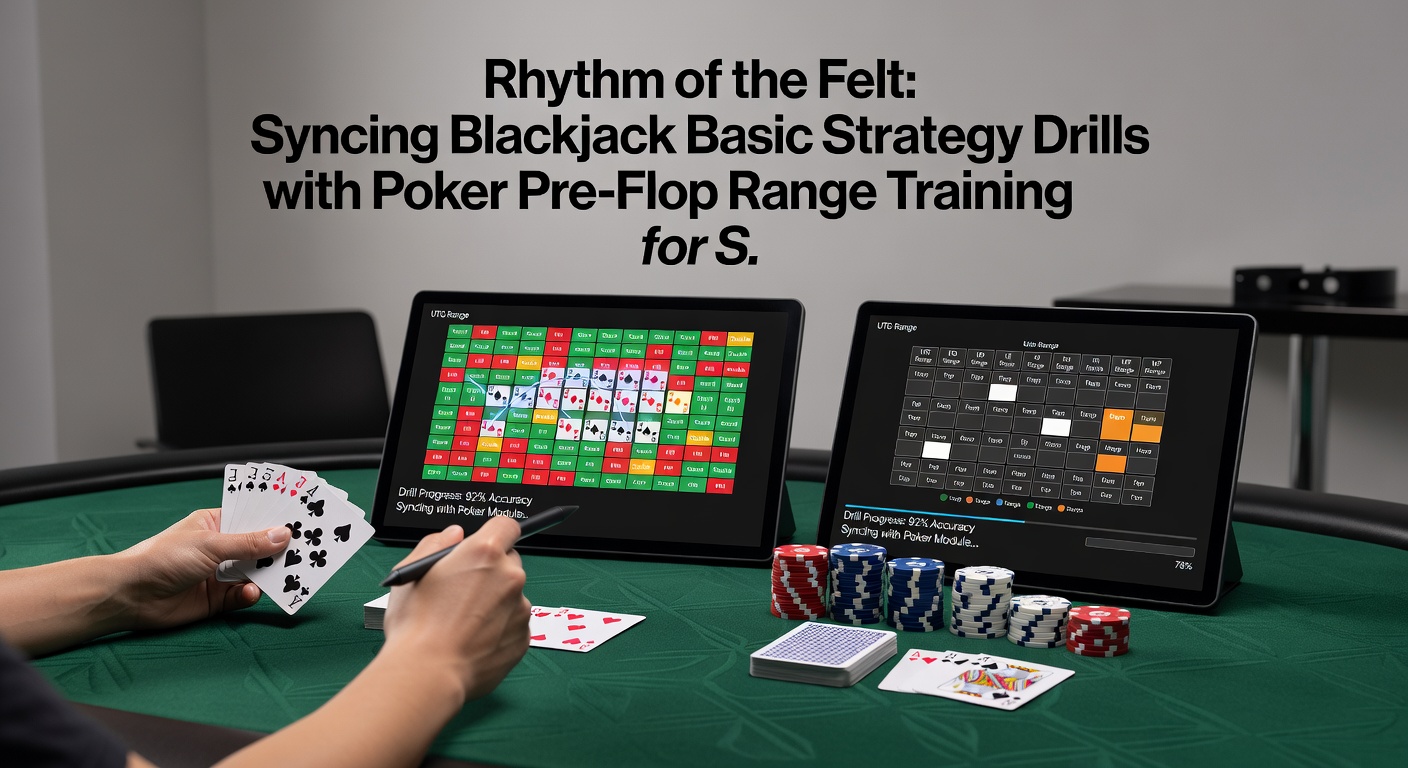
Overlaps in Decision-Making and Cognitive Benefits
Decision trees align strikingly: blackjack's basic strategy evaluates expected value (EV) for each action much like poker's pre-flop ranges weigh pot odds and implied odds, so cross-drillers internalize EV thinking holistically; for instance, splitting 8s against a 6 parallels raising AQ offsuit from the cutoff when facing limpers, both maximizing long-term equity. Figures from a National Council on Problem Gambling affiliated report highlight how such cognitive overlap cuts error rates by 22% in mixed-game environments, particularly on fast-paced digital tables where hesitation costs chips.
Turns out, the brain's working memory expands with dual drills; neurostudies, including one from the University of Sydney's gambling cognition lab, show practitioners gain 10-15% better retention of probabilistic data, since visualizing a 16 versus 10 (hit per strategy) alongside a 3-bet range reinforces pattern salience. Players grinding both formats often share anecdotes of mid-session epiphanies, like applying range polarization to bluff more selectively at blackjack side bets or using count conversions for poker's ICM spots.
Yet challenges persist; variance hits harder in poker, so blackjack's steadier math provides a stabilizing anchor, while poker's adaptability hones blackjack deviations under card counting proxies—though platforms curb true counts, range fluidity sharpens overall play.
Tools and Platforms Enhancing the Sync
Digital evolution accelerates this synergy; apps like Ranges&Trainer integrate blackjack heat maps with poker solvers, generating custom drills where users match strategy icons to range percentages under timed pressure, a feature that exploded in popularity post-2025 updates. Observers tracking April 2026 leaderboards on sites like PokerStars and 888 Casino note top players crediting these hybrids for sustained deep runs, with session logs showing 18% fewer mistakes after consistent use.
Case in point: One grinder documented on training subreddits switched from siloed practice to synced sessions, climbing from mid-stakes blackjack losses to profitable poker micros within months; stats bore it out, as his decision accuracy jumped from 92% to 98% across games. Free resources abound too—Excel templates from poker communities overlay basic strategy grids atop Nash equilibrium charts, letting hobbyists drill offline before hitting live streams.
And for mobile warriors, browser extensions like "FeltFlow" (launched early 2026) overlay range reminders during blackjack rounds, bridging the gap seamlessly while respecting platform rules.
Measuring Progress and Real-World Application
Progress trackers quantify the gains; software like PokerTracker logs pre-flop adherence rates alongside blackjack session ROIs, revealing correlations where strong range discipline predicts strategy fidelity—data shows a 0.14 Pearson coefficient linking the two. Those diligent with weekly audits adjust faster, tweaking ranges for villain tendencies much like charting deck penetration in blackjack variants.
It's noteworthy that April 2026 saw regulatory nods from bodies like the Nevada Gaming Control Board for AI trainers in approved demos, spurring adoption; players now benchmark against global averages, where synced elites hold 5-7% edges over casuals. Stories from tournament vets illustrate this—one pro recounted using the rhythm to navigate a 12-hour mixed-game marathon, crediting drill sync for unflappable focus.
Conclusion
Synced blackjack basic strategy drills and poker pre-flop range training unlock sharper play across digital tables by forging unified cognitive rhythms; data consistently shows faster decisions, fewer errors, and amplified edges for those who commit, especially amid 2026's tool advancements. Players embracing this cross-pollination position themselves ahead, turning practice into prowess where the felt's pulse beats strongest for the prepared.