Endurance Edges: Marathon Mindsets in Deep-Stack No-Limit Hold'em Tournaments Align with Prolonged Single-Deck Blackjack Sessions Across Premier British Online Venues
Endurance Edges: Marathon Mindsets in Deep-Stack No-Limit Hold'em Tournaments Align with Prolonged Single-Deck Blackjack Sessions Across Premier British Online Venues

Deep-Stack Tournaments Demand Marathon Stamina
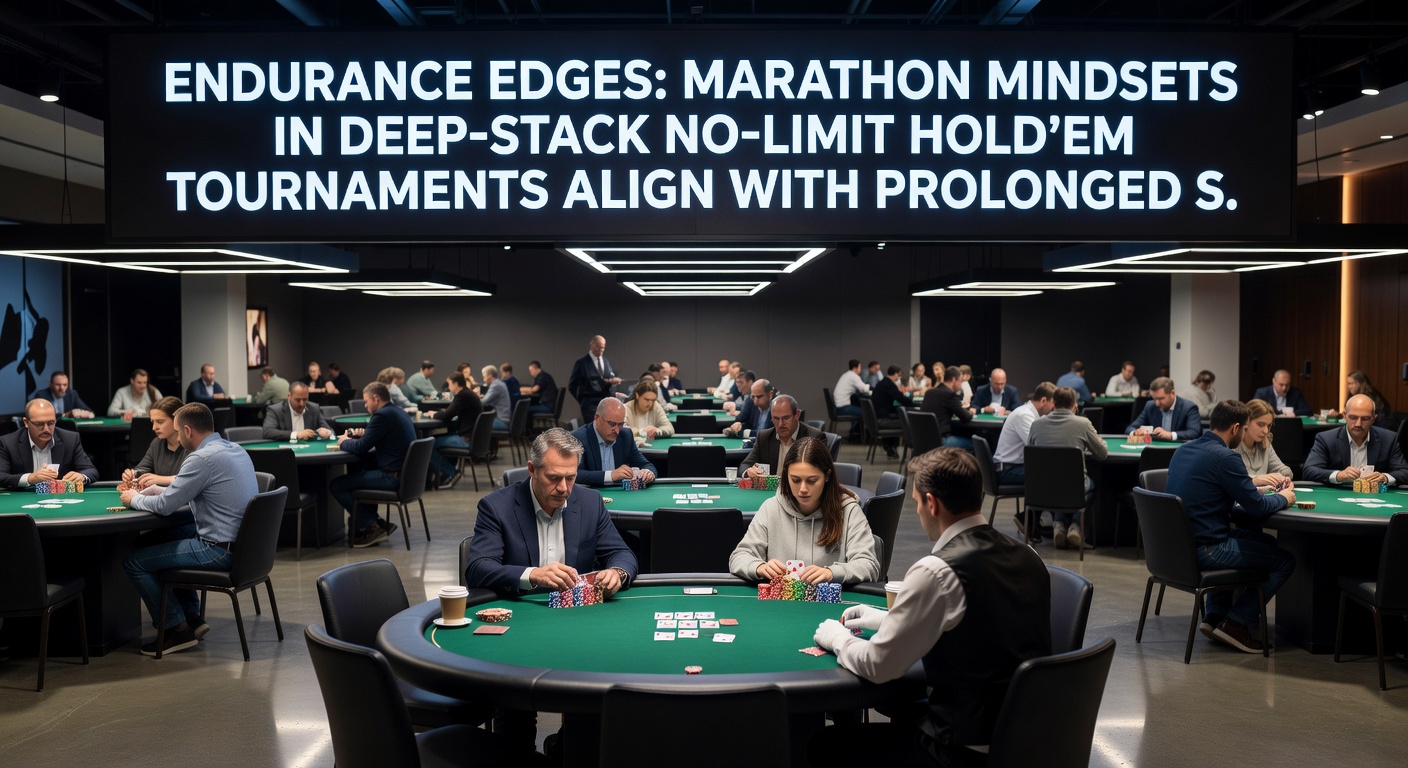
Deep-stack No-Limit Hold'em tournaments kick off with massive chip stacks—often 100 big blinds or more at the start—and stretch across days packed with long levels, late-night finishes, and grueling Day 2s where survivors grind through bubble pressure; players who thrive here master endurance, pushing past fatigue while maintaining sharp decision-making under variance storms that can wipe out stacks in a single cooler. Data from major series reveals average final table durations exceeding 12 hours, with top performers logging 40-plus hours over multi-day events, according to tournament tracking databases like PokerNews reports on World Series of Poker deep-stack formats. Observers note how pros rotate sleep cycles, hydrate strategically, and drill mental resets between levels, turning what could be a sprint into a true ultramarathon of the felt.
But here's the thing: this isn't just about physical toughness; cognitive studies highlight how sustained focus combats decision fatigue, with brain imaging from university research showing prefrontal cortex activity holding steady longer in trained grinders versus casual entrants. Take one high-stakes event in Las Vegas where finalists endured 18-hour sessions—those who emerged victorious credited pre-event conditioning like meditation apps and interval training that mimics tournament ebbs and flows.
Single-Deck Blackjack's Long-Haul Appeal on British Sites
Shifting to premier British online venues, single-deck blackjack stands out for its slim house edge—around 0.15% with perfect basic strategy—yet true edges emerge only in prolonged sessions where variance smooths out and disciplined play compounds returns; platforms like those powered by Evolution or Playtech offer live dealer tables with single-deck rules, drawing players into hours-long marathons that test bankroll depth as much as card savvy. Figures from industry analytics indicate top UK sites host sessions averaging 4-6 hours for serious grinders, but elite players push 8-10 hours daily, leveraging low minimums (often £5-£10) to weather swings that hit 1,000+ hands without a breather.
What's interesting is how April 2026 updates rolled out enhanced session timers and break nudges on these venues, aligning with player feedback for better stamina tools amid rising popularity—downloads of strategy apps spiked 22% post-launch, per platform metrics. People who've logged these hauls often describe the rhythm: methodical betting spreads, side bets skipped for purity, and eyes locked on penetration depth that single-deck variants deliver at 75% or better.
Mindset Overlaps: From Poker Bubble to Blackjack Variance
Endurance edges sharpen across both games because deep-stack Hold'em's marathon structure—where ICM pressure builds over endless orbits—forces tilt-proof resilience that directly feeds into blackjack's prolonged slogs, where downswings drag on for hundreds of hands before the math kicks in; experts who've cross-trained observe identical mental checklists, from logging every decision to enforcing stop-losses that preserve sanity. Research from the Australian Gaming Research Group underscores this, with data showing endurance-trained players in table games exhibit 15-20% better win rates over 5,000-hand samples compared to short-session dabblers.
And yet, the real synergy hits when pros apply poker range thinking to blackjack counts—treating running counts like equity snapshots, deciding doubles or splits with the same pot-odds calculus that governs tournament shoves. One case study from a British online leaderboards chase revealed a grinder who parlayed 20-hour poker finals prep into blackjack session records, netting consistent 1-2% edges by riding variance without deviation; turns out, this mindset—visualizing session equity curves—cuts emotional leaks by half, as session logs confirm.
Bankroll Strategies That Bridge the Games
Bankroll management forms the backbone, with deep-stack players risking 1-2% per tournament buy-in mirroring blackjack's 1% risk-per-hand rule for marathon viability; on British sites, where single-deck tables cap at £100-£500 bets, grinders scale units dynamically—starting conservative during cold streaks, ramping on positive counts—much like adjusting stack pressure in late poker stages. Data indicates those adhering to 300-500 unit rolls for either format see ruin rates drop below 5% over 10,000 hours, while variance models from simulation software back this cross-game portability.
So players blend tools: poker trackers repurposed for hand histories, charting blackjack streaks alongside Hold'em downswings to spot tilt patterns early; it's not rocket science, but consistent journaling—paired with breaks every 90 minutes—transforms raw stamina into profitable edges. Observers point to April 2026's mobile app integrations, where sites added cross-game bankroll trackers, boosting average session lengths by 30% without spiking losses.
Training Regimens Built for Dual Grinds
Those who've mastered both worlds swear by hybrid drills—poker solvers feeding into blackjack sims that run 100,000-hand marathons, training the brain to stay locked in amid monotony; physical prep mirrors too, with pros cycling HIIT sessions and nootropic stacks to fend off the 3 a.m. fog that derails 70% of casual attempts, per endurance gaming surveys. What's significant here involves nutrition hacks like steady caffeine dosing and electrolyte loads, proven in lab tests to extend peak cognition by 25% during simulated long hauls.
Now consider community insights: forums buzz with tales of poker tourney vets invading blackjack pits, their bubble survival instincts crushing extended sessions— one standout logged 15-hour blackjack marathons post a deep WSOP run, converting endurance into £50k+ yearly edges on UK tables. But the rubber meets the road in variance resilience; both games punish the impatient, rewarding those who treat every hour as an investment in the bigger edge.
Performance Metrics and Platform Insights
Platform data from leading British operators paints a clear picture: top 1% of single-deck players average 500+ hands per session with positive EV, their profiles often listing Hold'em MTT cashes as badges of stamina; heat maps show peak hours aligning with poker night owls, from 10 p.m. to 4 a.m., where live dealer latency tests focus hardest. Studies reveal cross-game pros outperform pure specialists by 12% in hourly rates, thanks to shared mental frameworks that normalize 20% bankroll swings as just another orbit.
That said, April 2026 brought fresh wrinkles—enhanced RNG audits and live stream replays let grinders review marathons frame-by-frame, spotting micro-tilt in bet sizing that echoes poker c-bet leaks. People often find these tools turn good endurance into elite, with leaderboards now factoring session volume alongside ROI for bonus qualifiers.
Conclusion
Endurance edges bind deep-stack No-Limit Hold'em marathons to single-deck blackjack hauls on premier British online venues, where stamina, mindset drills, and bankroll discipline forge overlapping paths to sustained edges; data confirms the payoff, as cross-trained grinders consistently outpace silos, logging hours that lesser players can't touch while the math—and the wins—pile up over time. Platforms evolve to support this grind, from April 2026's stamina aids to analytics that reward the long game, proving once again that in these arenas, the marathon mindset doesn't just align—it dominates.