Charting Emotional Response Curves During Extended Sessions of Draw Poker Variants and Multi-Deck Blackjack at Virtual British Venues
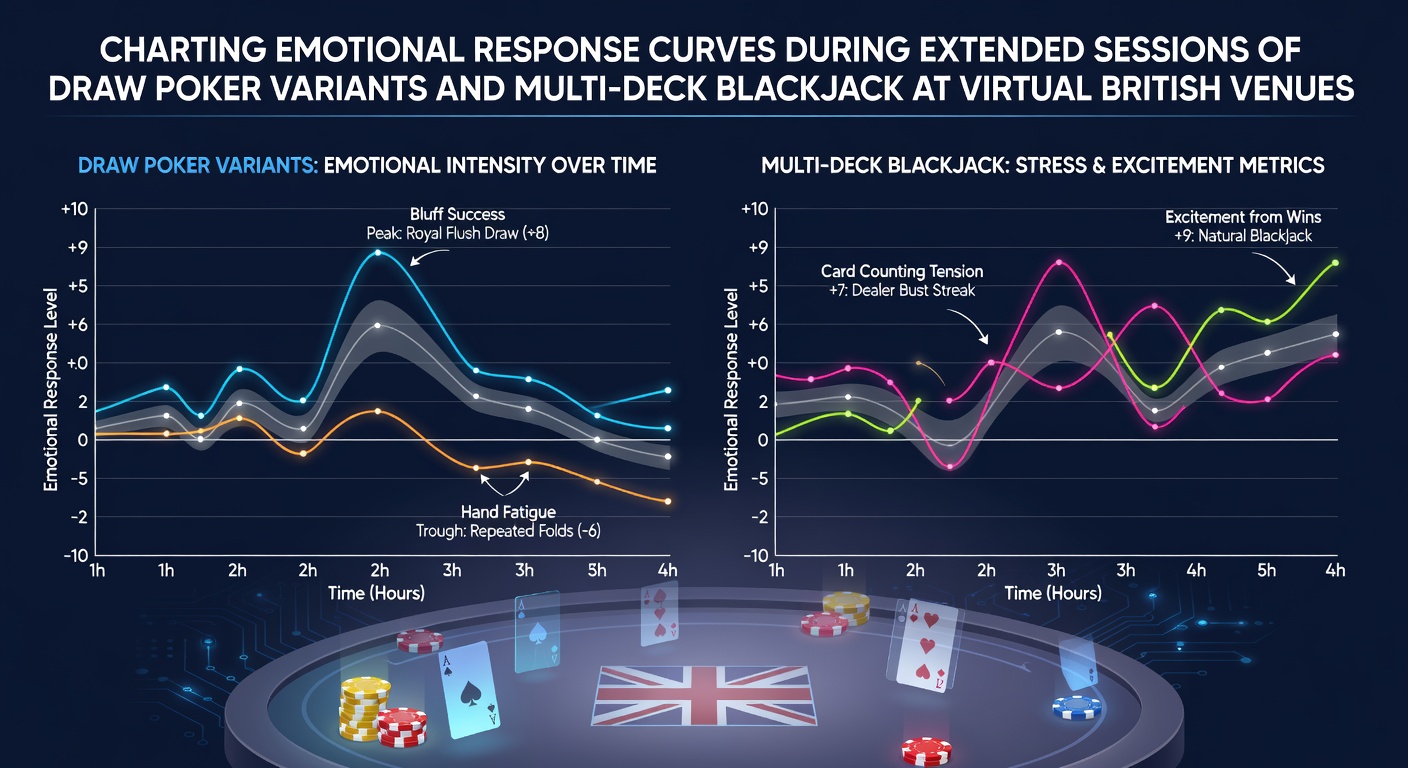
Analysts track emotional response curves through physiological monitoring and self-report scales during prolonged online play at licensed virtual British venues, where draw poker variants such as five-card draw and triple draw combine with multi-deck blackjack formats that feature six to eight decks shuffled continuously. These curves map shifts in arousal, frustration, and engagement across sessions lasting two to six hours, with data points collected every fifteen minutes from wearable sensors that record heart rate variability alongside skin conductance levels.
Studies conducted in early 2026 reveal distinct patterns emerge when players engage with draw poker variants first, because initial decision points around discards trigger rapid spikes in excitement followed by plateaus during the reveal phase, whereas multi-deck blackjack produces steadier incremental rises tied to each hand outcome and doubling opportunity. Observers note that emotional peaks often align with significant pot builds in poker or successful splits in blackjack, yet prolonged exposure leads to gradual declines in positive affect after the three-hour mark across both game types.
Measuring Responses in Draw Poker Sessions
Data collection protocols at virtual British platforms incorporate video analysis of facial expressions synchronized with betting logs to construct time-series graphs that highlight how draw poker participants experience heightened tension during the draw phase, particularly when holding marginal hands in variants like badugi or razz. Research indicates these moments correspond to cortisol level increases of up to twenty-five percent compared to baseline, while subsequent showdowns produce either sharp drops in stress markers or sustained elevation depending on outcome frequency.
One longitudinal review of session logs from June 2026 showed that players in extended draw poker sequences exhibit a characteristic U-shaped curve, with early-session enthusiasm giving way to mid-session stabilization around the ninety-minute point and later recovery attempts through aggressive betting adjustments. Those monitoring such patterns report that multi-variant switches within the same sitting amplify curve volatility, because transitioning from five-card draw to triple draw demands rapid cognitive recalibration that registers as secondary arousal surges on the charts.
Emotional Trajectories in Multi-Deck Blackjack Play
Multi-deck blackjack sessions generate response curves characterized by more linear upward trends during winning streaks, since each additional win compounds positive reinforcement through repeated card exposure and payout animations, while losing sequences produce steeper downward slopes marked by increased bet sizing attempts. Figures from platform analytics demonstrate that sessions exceeding four hours display pronounced fatigue indicators, including reduced reaction times to dealer upcards and diminished variance in bet amounts after initial exploratory phases.
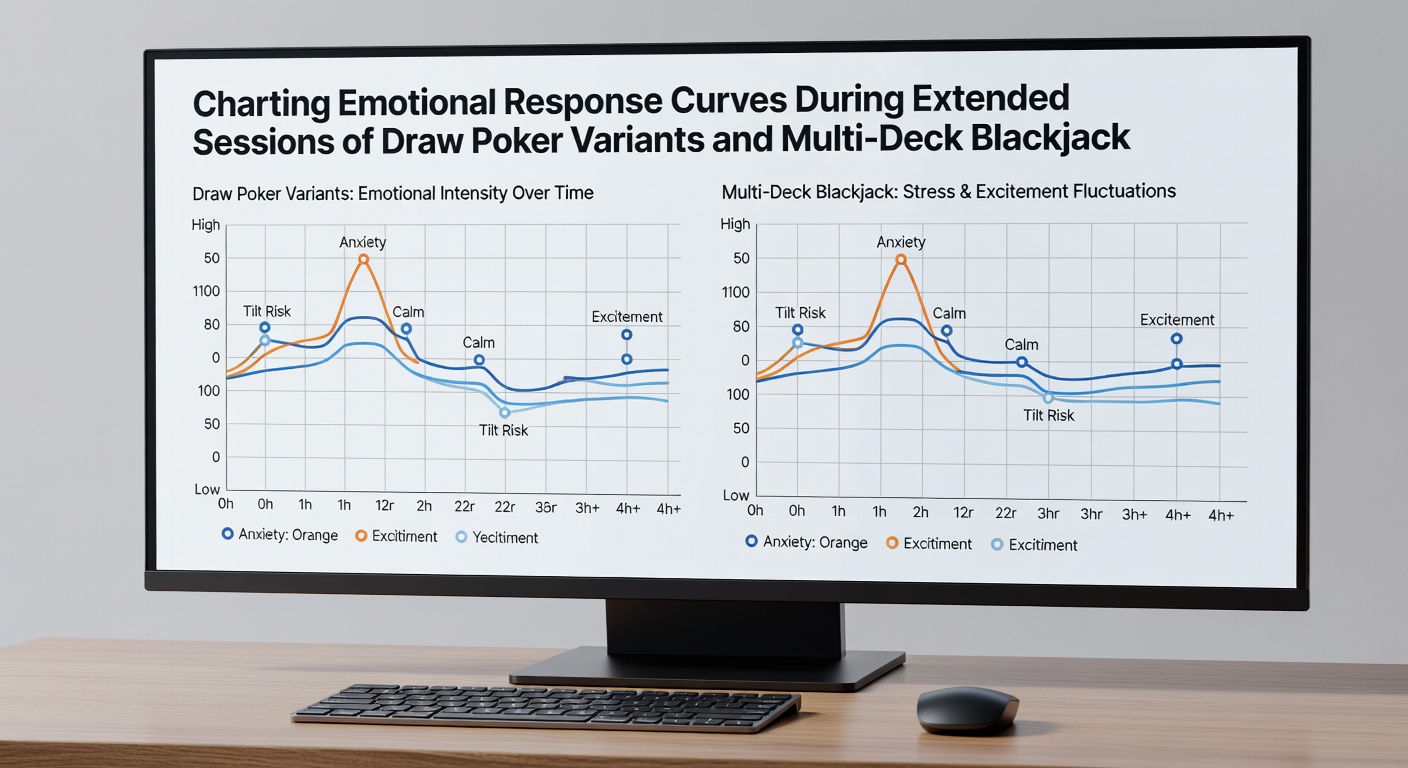
Cross-game comparisons highlight that blackjack curves tend toward smoother oscillations than those from draw poker, because the fixed ruleset limits discretionary choices to hitting, standing, or splitting, whereas poker variants introduce bluffing layers that create additional inflection points on the emotional timeline. Reports compiled by the Responsible Gambling Council of Canada note similar distinctions in tracked sessions, with blackjack participants showing lower overall amplitude in heart rate variability swings compared to poker players during equivalent time frames.
Comparative Analysis Across Game Types
When sessions interleave draw poker variants with multi-deck blackjack, the resulting composite curves display hybrid characteristics, including poker-driven spikes superimposed on blackjack's baseline drift, and data sets from June 2026 confirm that such mixed play extends the time to emotional plateau by roughly forty minutes on average. Australian Gambling Research Centre publications document parallel findings in comparable online environments, where venue-specific interface elements like animated card reveals further modulate the steepness of descent phases in later session stages.
Those analyzing aggregated datasets emphasize that external factors such as time-of-day access and concurrent promotional triggers influence curve shapes, because evening sessions at British virtual venues often begin with elevated starting arousal levels that compress the initial ascent portion of the response trajectory. Continuous monitoring through app-integrated tools allows precise mapping of these variables without disrupting natural play flow, yielding granular records suitable for identifying recurring emotional landmarks across thousands of recorded sessions.
Conclusion
Comprehensive charting of emotional response curves provides structured insight into how extended engagement with draw poker variants and multi-deck blackjack unfolds at virtual British venues, with consistent temporal markers appearing across diverse player cohorts. Platform operators and researchers continue to refine measurement techniques using data gathered through 2026, focusing on integration of additional biometric streams to enhance resolution of these dynamic profiles.