Card Sequencing Patterns in Automated Shufflers: How Mechanical Precision Influences Multi-Deck Probability Shifts and Range Adjustments During Hold'em Sessions on UKGC Approved Digital Venues
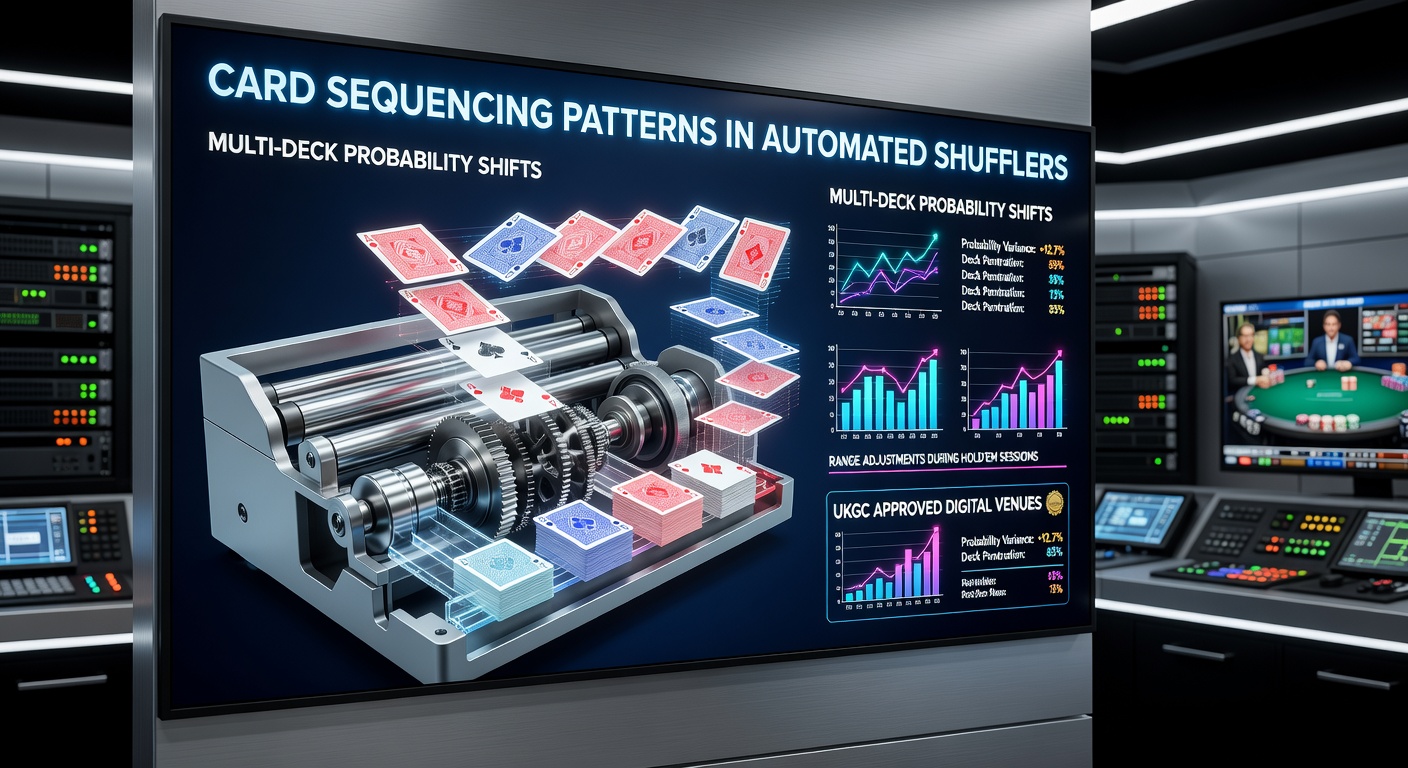 Automated shufflers have become standard equipment across licensed online platforms that replicate physical multi-deck environments for Texas Hold'em. These devices combine rollers, optical sensors, and internal compartments to reorder cards between hands yet their mechanical components introduce subtle sequencing patterns when precision tolerances drift over time. Operators track these patterns because even minor deviations alter the distribution of card clusters that reach the board and this in turn prompts players to recalibrate opening ranges and continuation frequencies during long sessions.
Mechanical Operation and Pattern Formation
Shufflers typically draw from an eight-deck shoe and employ a series of interleaved bins that drop cards in programmed sequences while optical readers verify placement. When calibration remains within manufacturer specifications the output approaches uniform randomness yet friction on drive wheels and slight misalignment in bin gates can produce repeating intervals between high and low cards. Observers note that these intervals often span three to seven hands before the pattern resets and data from field inspections shows such cycles become detectable after roughly four hours of continuous operation.
Technicians measure deviation through cycle logs that record card exit order against expected probability curves and when exit frequencies exceed a two-percent threshold from baseline the machine undergoes recalibration. Research indicates that temperature fluctuations in server rooms housing these units accelerate wear on sensor arrays and this accelerates the emergence of non-random clusters particularly in clubs that run twenty-four-hour Hold'em rings.
Multi-Deck Probability Shifts
Multi-deck setups dilute single-card probabilities but mechanical sequencing concentrates certain suit-rank combinations across consecutive shuffles. A cluster of aces and kings appearing more frequently in early positions shifts equity calculations for premium starting hands and players respond by tightening three-bet ranges when they detect the pattern through hand histories. Figures from independent testing laboratories reveal that a one-point-five percent increase in paired high-card frequency raises the expected value of suited connectors by nearly three percent in position while decreasing the profitability of small pairs out of position.
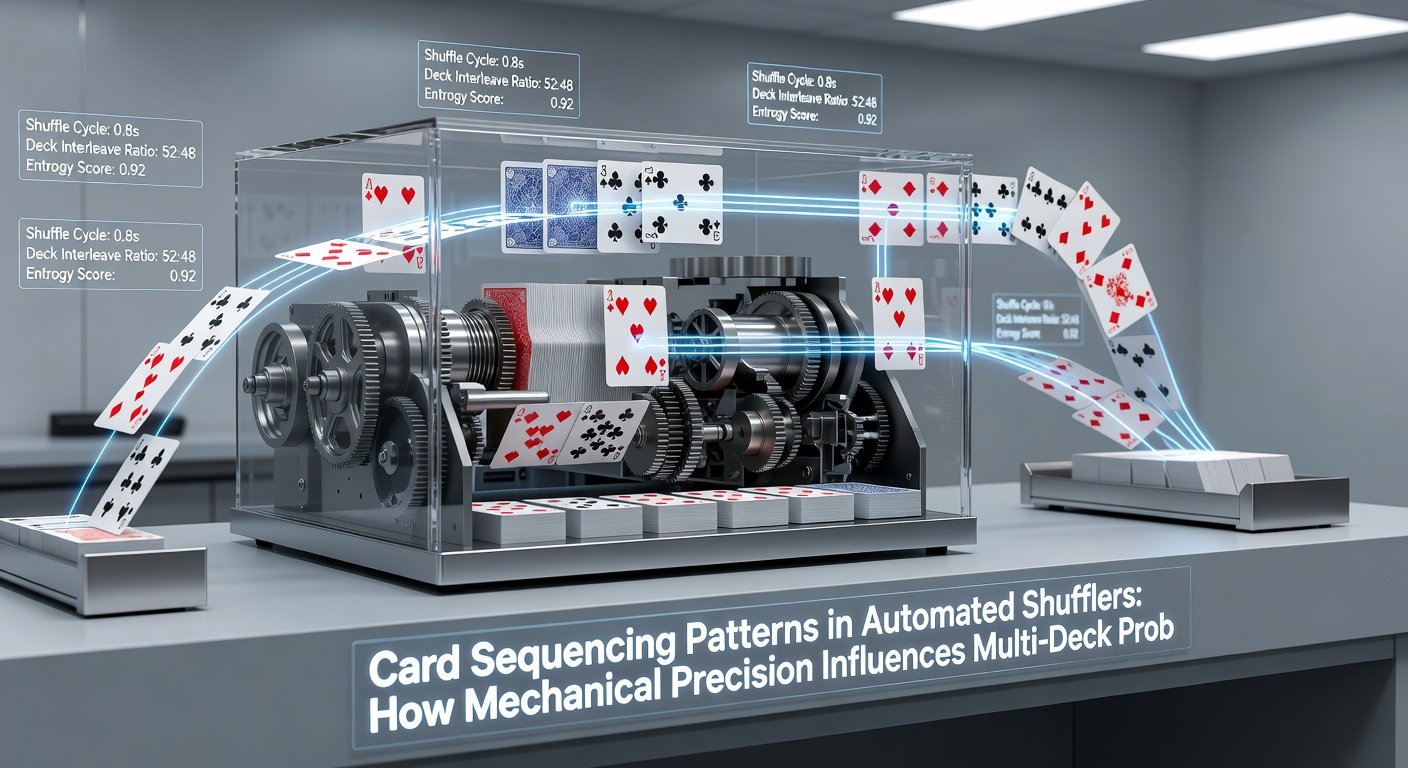
Dealers and floor staff monitor cumulative frequency reports that aggregate data across multiple tables and when reports flag recurring sequences management may swap machines mid-session. This practice maintains compliance with fairness standards while allowing experienced regulars to exploit brief windows where probability edges favor specific range adjustments. What's interesting is that these adjustments rarely involve dramatic changes because the underlying game remains Hold'em yet small modifications to bluff frequencies and value-bet sizing accumulate over hundreds of hands.
Range Adjustments in Practice
Players who review session data often widen their button stealing ranges when low-card clusters dominate recent boards and they tighten early-position opens when high-card sequences appear more often than expected. Software overlays used on approved platforms display running deviation metrics derived from shuffler output logs and these metrics help regulars decide whether to increase aggression in late position or adopt more defensive three-bet strategies. Case studies compiled by platform analytics teams demonstrate that participants who incorporate sequencing awareness into their decision trees achieve measurable improvements in hourly win rates compared with those who treat every shuffle as independent.
Regulatory audits conducted in May 2026 by the New Jersey Division of Gaming Enforcement confirmed that certified shufflers maintain overall randomness within acceptable limits yet the reports also highlighted the value of real-time monitoring tools that flag emerging patterns before they affect game integrity. Operators responded by integrating additional sensor diagnostics and this development has encouraged software providers to refine their range calculators accordingly.
Technical Standards and Monitoring
Industry groups such as the Gaming Standards Association publish guidelines that specify maximum allowable deviation for automated shuffling equipment. Compliance requires quarterly verification using standardized test decks and statistical sampling methods and platforms that exceed deviation thresholds must pause operations until recalibration occurs. These protocols reduce the duration of exploitable windows while still permitting the natural mechanical variations that arise during extended use.
Training programs for dealers and technical staff emphasize recognition of early warning signs such as inconsistent card drop speeds and irregular noise from drive motors. When staff identify these signs they log the observations and schedule preventive maintenance and this proactive approach limits the impact of sequencing patterns on multi-deck probability calculations used by Hold'em participants.
Conclusion
Mechanical precision in automated shufflers continues to shape probability distributions in multi-deck Hold'em environments and players who monitor sequencing patterns gain incremental information for range adjustments. Ongoing certification processes and real-time analytics keep these effects within regulated boundaries while allowing the game to retain its strategic depth. As platforms adopt newer sensor technologies the frequency and magnitude of detectable shifts are expected to decline yet awareness of these dynamics remains relevant for anyone participating in extended sessions on licensed digital venues.